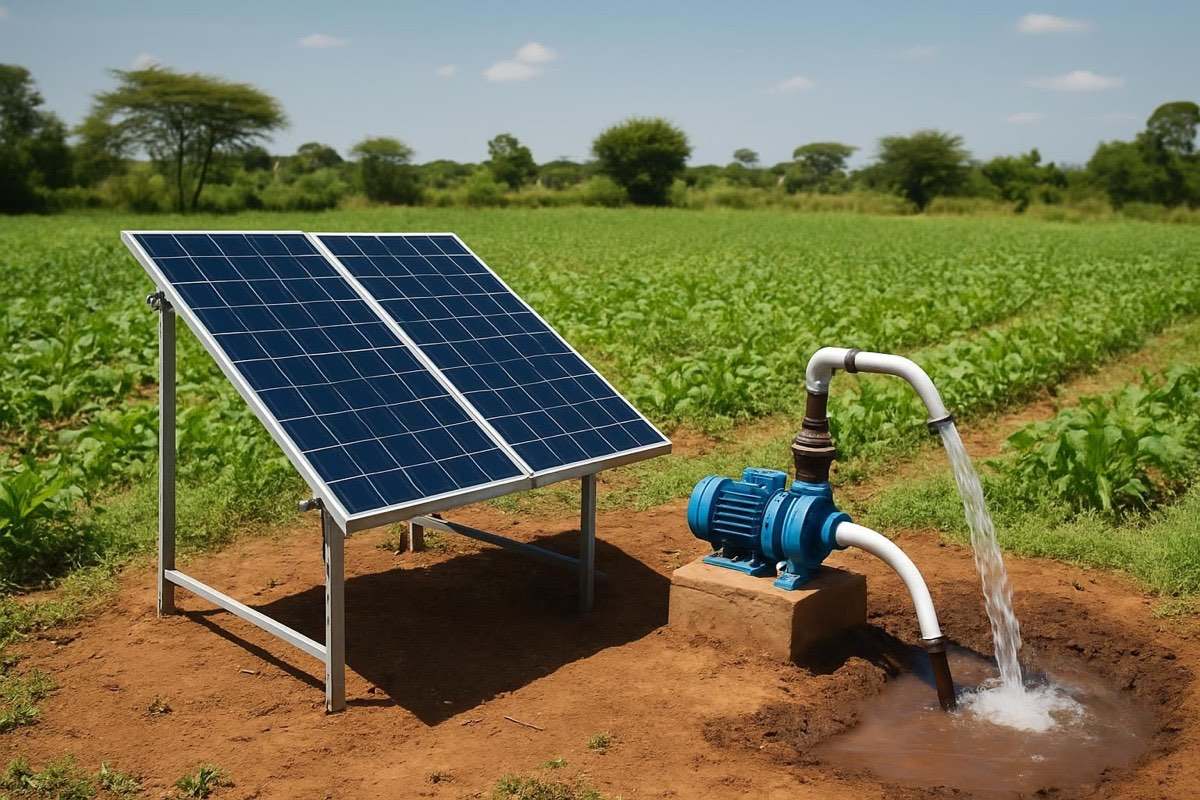
1HP Solar Water Pump Kit
1HP · ~10,000L/day
Complete solar pumping kit for shallow boreholes, wells and farm irrigation.
FromKES 110,000
Get a quote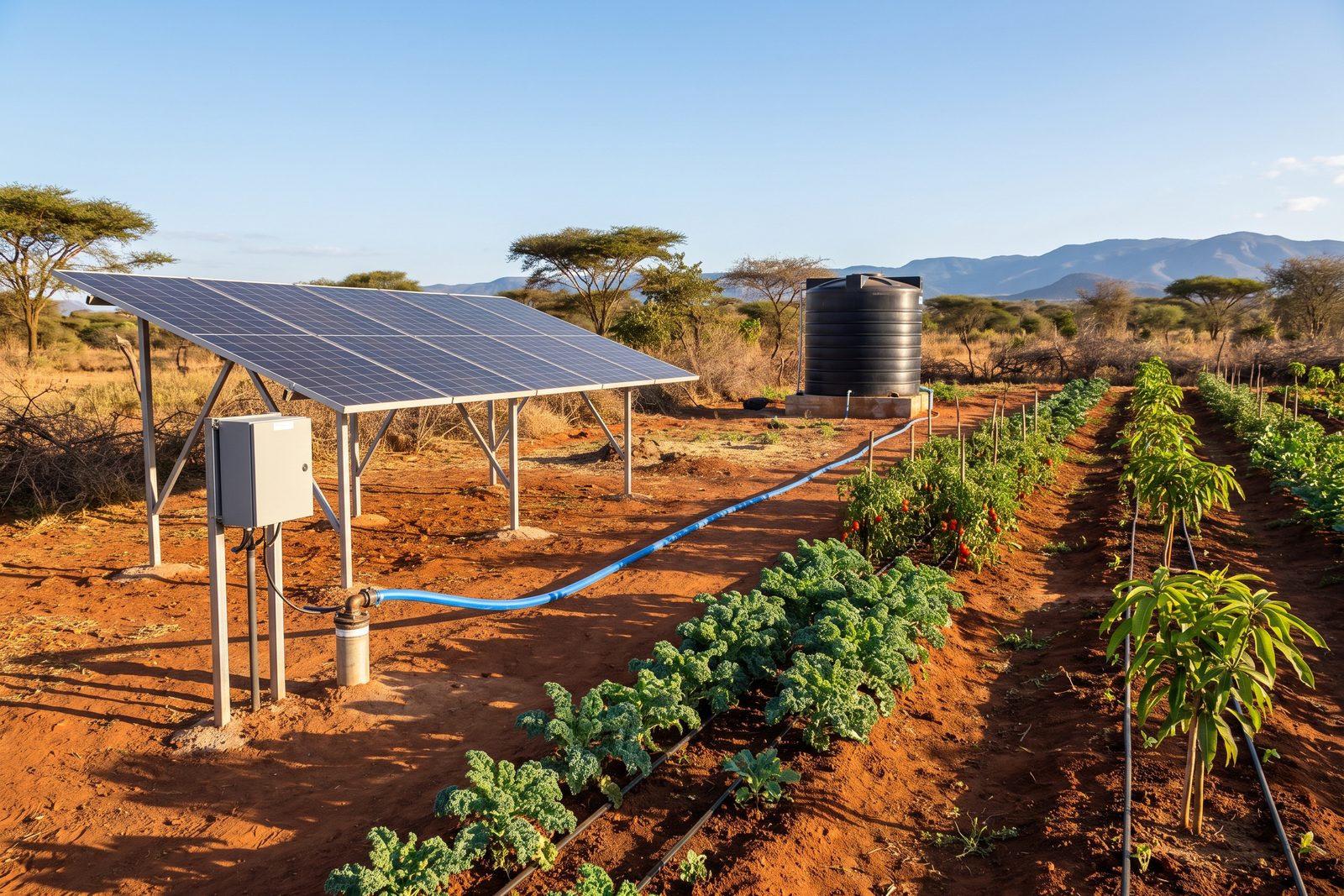
Pump water with free solar power from your borehole, well or river for homes, livestock and farm irrigation.
✓ Free site survey · installation & delivery countrywide
By Admin · Updated June 2026
A solar water pump in Kenya lifts water from a borehole, shallow well, river or tank using free power from solar panels, with no diesel and no monthly KPLC bill. A small surface pump kit starts around KES 37,000, a one-acre irrigation pump runs about KES 58,000 to 95,000, and a deeper borehole submersible system sits between KES 130,000 and KES 400,000 depending on how far down your water sits and how much you need per day. The right size depends on three numbers: pumping depth, daily water volume, and head (the vertical lift plus pipe distance to your tank).
Solar Company Kenya is an independent matching service, not an installer. We connect you with vetted, EPRA-licensed installers who measure your borehole or water source, size the panels and pump correctly, supply the kit, and back it with a workmanship and equipment warranty. This page gives you honest indicative prices and real specs so you walk into that conversation knowing what good looks like, instead of guessing from a product photo with no head or flow figures on it.
1HP · ~10,000L/day
Complete solar pumping kit for shallow boreholes, wells and farm irrigation.
2HP · ~25,000L/day
Higher-head pump kit for deeper boreholes and larger irrigation needs.
Prices track the work the pump does, mainly depth and daily volume. As a guide for mid-2026: a shallow surface pump kit (around 0.5HP, 40m head, 5,800 litres/hour) runs about KES 37,000 to 46,000 with one to three 300W panels. A one-acre irrigation pump such as the Futurepump SE1 (up to 10,000 litres/day, 15m total lift, 60W panel) sits around KES 58,000 to 72,000, and a two-acre surface unit around KES 90,000 to 99,000.
Borehole submersibles cost more because they push water up from real depth. Expect roughly KES 130,000 for a small Dayliff Sunflo-B class system, and KES 250,000 to KES 400,000 for a deeper, higher-yield borehole kit with bigger panel arrays. These figures are pump-and-panel kit prices. Add installation labour, mounting, piping and a controller, which your installer quotes after a site visit. If you want overnight or cloudy-day pumping rather than daytime-only, a battery adds cost: a 5kWh lithium battery is about KES 180,000, though most farms skip it and pump into a raised storage tank instead, which is far cheaper than storing electricity.
A solar borehole pump in Kenya is a submersible unit that drops down the casing and pushes water to the surface. The single most important number is your pumping water level, the depth the water settles to while pumping, not the static level you see at rest. A borehole at 60m to 80m needs a stronger pump and more panel wattage than one at 30m, and undersizing here is the most common reason a system disappoints.
Match the pump to the borehole's tested yield too. If your borehole gives 2,000 litres/hour, a pump rated for 5,000 litres/hour will simply draw the water down and run dry, tripping its dry-run protection. A good installer reads your drilling and test-pumping report, picks a pump whose flow sits comfortably under the yield, and sizes the panel array (often 1,500W to 3,000W for domestic and small-farm boreholes) so the pump hits full output through the strong midday sun hours. Always confirm the controller has dry-run and over-voltage protection built in.
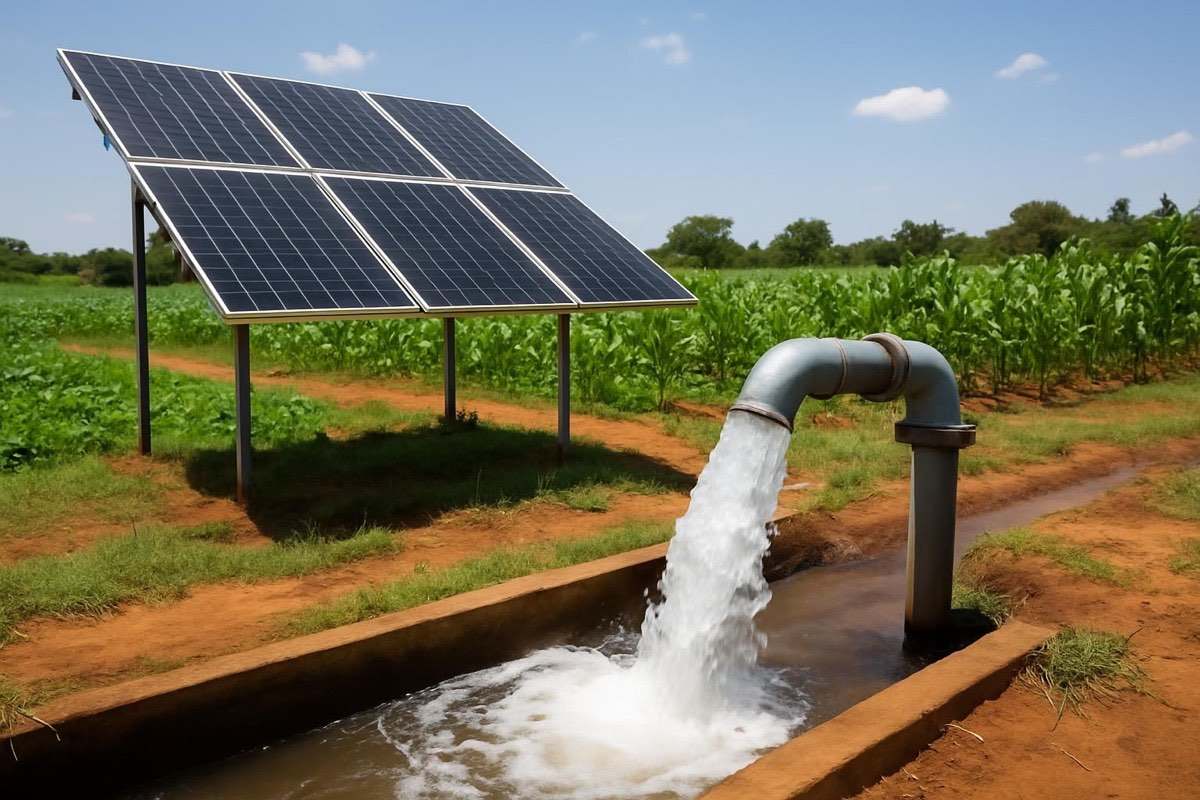
For irrigation Kenya farmers mostly use surface or floating pumps that draw from a river, dam, pan or shallow well, since the water is near the top. These are sized by acreage and method. A 60W to 230W panel surface pump covers up to one to two acres with drip or low-pressure spray, moving 3,000 to 10,000 litres a day in good sun. Drip irrigation stretches that water furthest; overhead sprinklers need more pressure and therefore more panels.
Suction lift matters here: most surface pumps lift water no more than about 7m from the source up to the pump, though they can push it horizontally over 300m to your field after that. If your river bank is high or the dry-season water drops far below the pump, you may need a submersible or a floating unit instead. Your installer should walk the source in both wet and dry conditions, or at least account for the dry-season low, so the pump still draws water in March when you need it most.
Most solar pumps in Kenya run direct: panels power the pump while the sun shines, typically giving you five to seven strong pumping hours a day. The simple, cheap answer to night and cloudy-day water is a raised storage tank, not a battery. Pump through the day, fill a 5,000 or 10,000 litre tank, and gravity feeds your house, troughs or drip lines around the clock. A tank costs a fraction of battery storage and needs no maintenance.
On overcast days output drops with the light, so size your system around your worst realistic month rather than a perfect sunny day, and keep a day or two of tank buffer. If you genuinely need pressurised water at night, for example a guesthouse or dairy, that is where a lithium battery earns its place at around KES 180,000 for 5kWh. For most homes and farms, a bigger tank beats a battery on both cost and longevity.
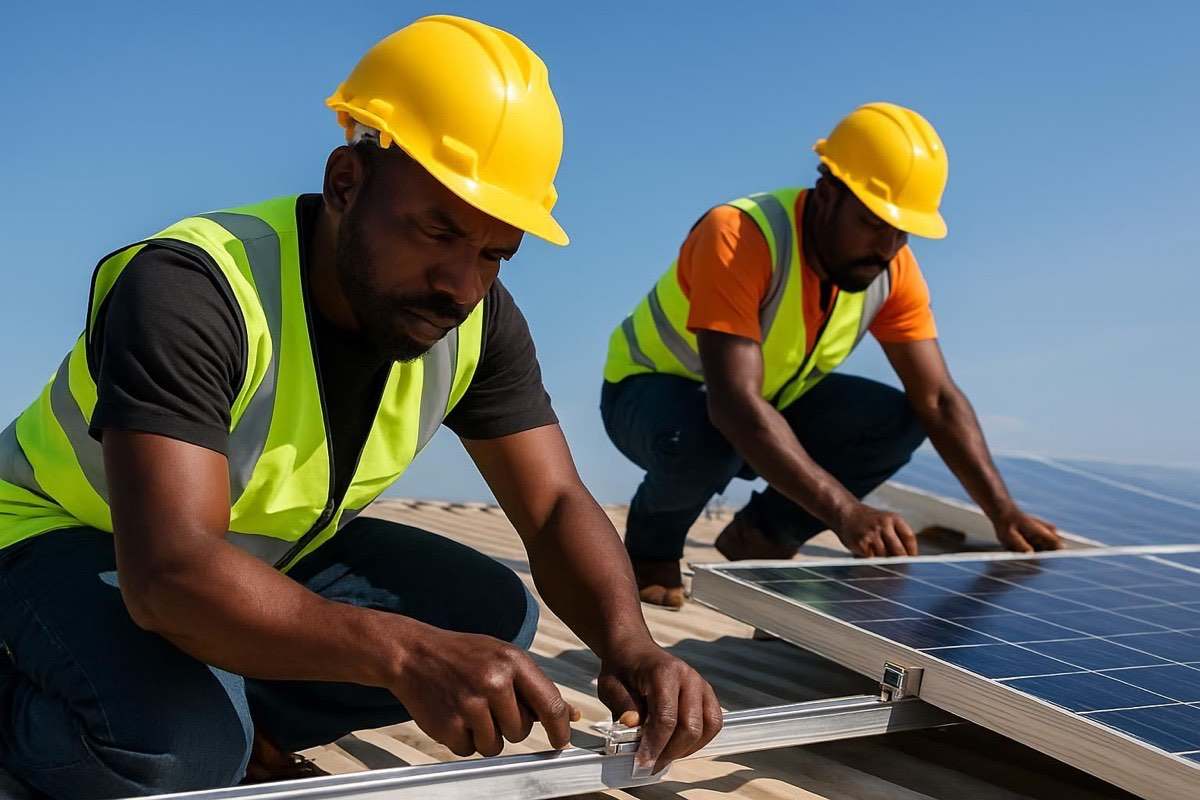
We are independent. We connect you with a vetted, EPRA-licensed installer, arrange your free site survey, and make sure you get a clear, written quote that sets out the system, equipment and warranty.
Answer a few quick questions and we'll connect you with a vetted, EPRA-licensed installer for a free site survey and a clear, written quote. Free site survey · installation & delivery countrywide.
Get my free quoteA small shallow or surface pump kit costs about KES 37,000 to 46,000, a one-acre irrigation pump around KES 58,000 to 95,000, and a borehole submersible system roughly KES 130,000 to KES 400,000 depending on depth and daily volume. These are pump-and-panel kit prices; installation, piping and a storage tank are quoted separately after a site visit.
Yes. A solar submersible pump is one of the most common ways to run a borehole in Kenya. The pump sits down the casing and the panels power it. The key is sizing it to your pumping water level (the depth water settles to while pumping) and to the borehole's tested yield, so it never runs dry. A licensed installer reads your drilling report to get this right.
A small solar borehole kit starts around KES 130,000, while deeper or higher-yield boreholes (60m to 100m plus) run KES 250,000 to KES 400,000 for the pump and panel array. The deeper the pumping level and the more litres per day you need, the larger the pump and panel wattage, which drives the price.
A shallow surface pump may run on a single 300W panel, a one-acre irrigation pump on one small 60W to 230W panel, and a domestic borehole pump typically on 1,500W to 3,000W of panels. A 300W panel costs about KES 16,000. Your installer sets the exact array so the pump reaches full output through the strong midday sun.
A direct solar pump only runs while the sun shines, usually five to seven strong hours a day. For night and cloudy-day water, the cheapest answer is to pump into a raised storage tank during the day and gravity-feed from it after dark. A lithium battery (about KES 180,000 for 5kWh) is only worth it if you need pressurised water at night.
For most Kenyan farms, yes. A solar pump has no fuel cost and very low maintenance, so it usually pays back the higher upfront price within two to four irrigation seasons versus diesel. Diesel still wins where you need large volumes pumped fast on demand regardless of weather, but for daily drip and livestock watering solar is cheaper to run.
Surface pumps can only suck water up about 7m from the source, but submersible solar pumps placed inside a borehole can lift water from 80m to over 100m deep, depending on the pump and panel size. If your water source is more than about 7m below the pump position, you need a submersible rather than a surface unit.
Yes, through your installer and the manufacturer. Quality pumps carry multi-year warranties (some irrigation pumps quote up to a ten-year operating warranty), and panels are typically warranted for performance over decades. Your EPRA-licensed installer also backs the workmanship. Always get the warranty terms in writing before you pay.
Get matched with vetted, EPRA-licensed installers who survey your roof, size the system to your bills and fit it properly the first time.
View Installation →Complete, ready-sized solar packages with real KES prices: from a 1kW backup unit to a 15kW system for homes, farms and small businesses.
View Solar Systems →What solar actually costs in Kenya: panels, inverters, batteries and full systems, with real KES figures and no hidden extras.
View Prices →Cut your business's daytime power bill with a right-sized commercial solar system, costed in real KES and built by a vetted, EPRA-licensed installer.
View Commercial →